Understanding the Citations Tab
Last updated: April 2, 2026
The Citations tab shows you where AI engines get their information from when generating answers to your search terms. Use it to see which domains, URLs, and content categories are being cited, and how your brand compares to competitors in citation share.
Why It Matters
When an AI engine answers a question, it often references external sources to support its response. The Citations tab gives you visibility into those sources, so you can understand which domains and content types carry the most weight across the AI engines you track.
Citations vs. Mentions
Before diving in, it helps to understand the difference between these two terms:
Citation - A citation occurs when an AI engine references a specific URL or domain as a source in its answer. For example: "According to rankscale.ai, AI visibility tracking helps brands monitor..."
Mention - A mention is any time your brand name appears in the AI engine's answer, regardless of whether a source URL is provided.
A single AI response can contain mentions without citations (the AI talks about your brand but does not link to your site) or both together. The Citations tab focuses specifically on source references.
Total Citation Occurrences
At the top of the tab, you can see the total number of citation occurrences across all your tracked search terms. This tells you how many times AI engines returned a citation in their responses, along with the number of brands found and how often each was cited.

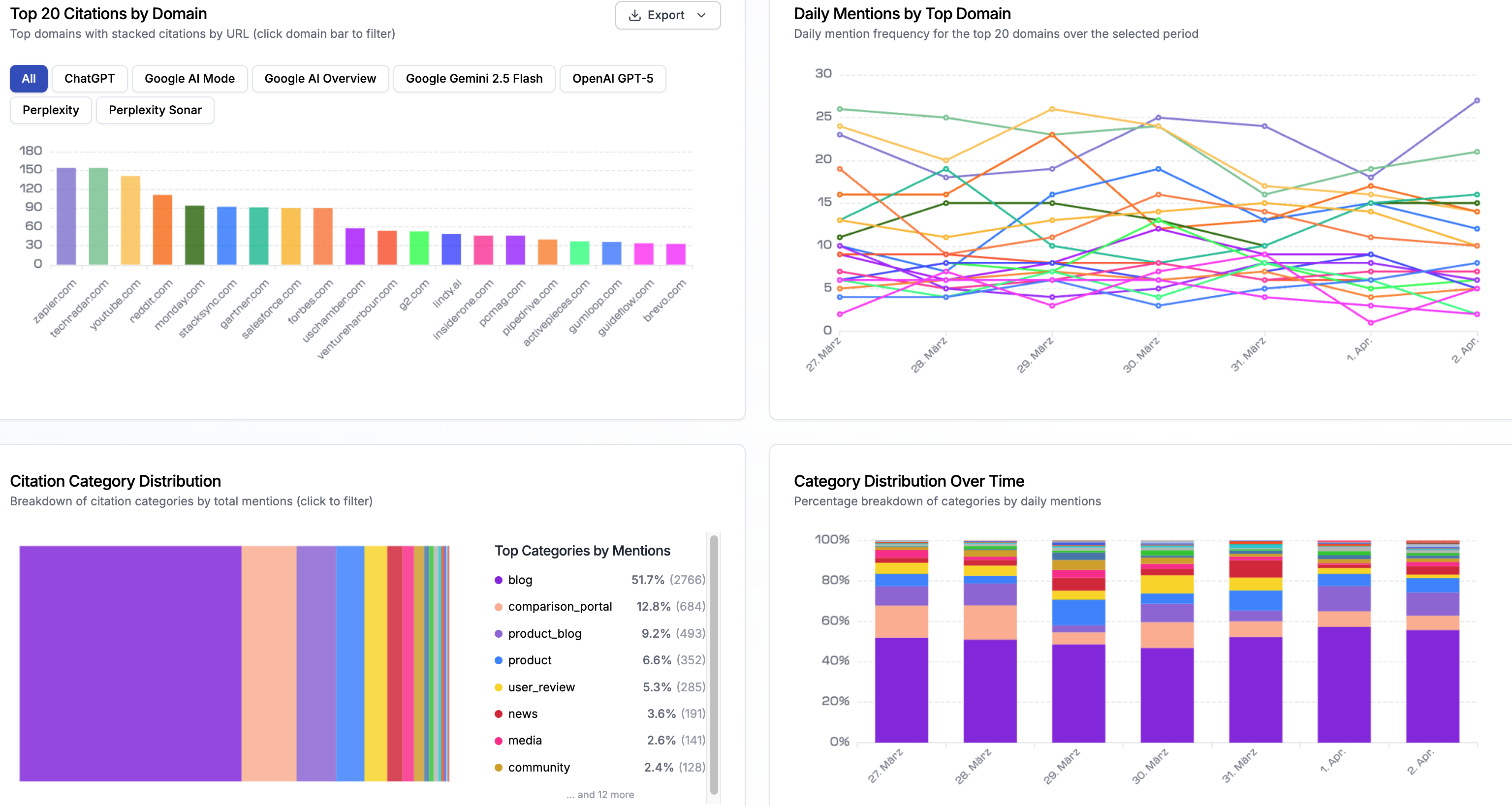
Top 20 Citations by Domain
The 20 most frequently cited domains across your tracked search terms, with stacked citations by URL. This gives you a clear picture of which domains the AI engines prefer as sources.
Above the chart, you can filter by individual AI engine (for example, ChatGPT, Google AI Mode, Perplexity) to compare how source preferences differ between engines. Click any domain bar to filter further.
Daily Mentions by Top Domain
Tracks how often the top 20 domains appear over your selected time period. Each domain is represented by a separate line, so you can spot trends such as a domain gaining or losing prominence as a cited source over time. The frequency of data points depends on your tracking interval.
Citation Category Distribution
Breaks down citation categories by total mentions, including blog, news media, YouTube, comparison sites, and more. Click any category to see the top URLs within it, along with their citation count.
For example, clicking blog might show that 50.8% of all citations come from blog content, with 2,759 total mentions across 1,151 unique URLs, and a ranked list of the most-cited blog URLs.
Category Distribution Over Time
Shows the percentage breakdown of categories by daily mentions. This helps you see whether the mix of content types being cited is shifting over time, for instance if news sources are becoming more prominent relative to blogs for your tracked search terms.
Brand Share
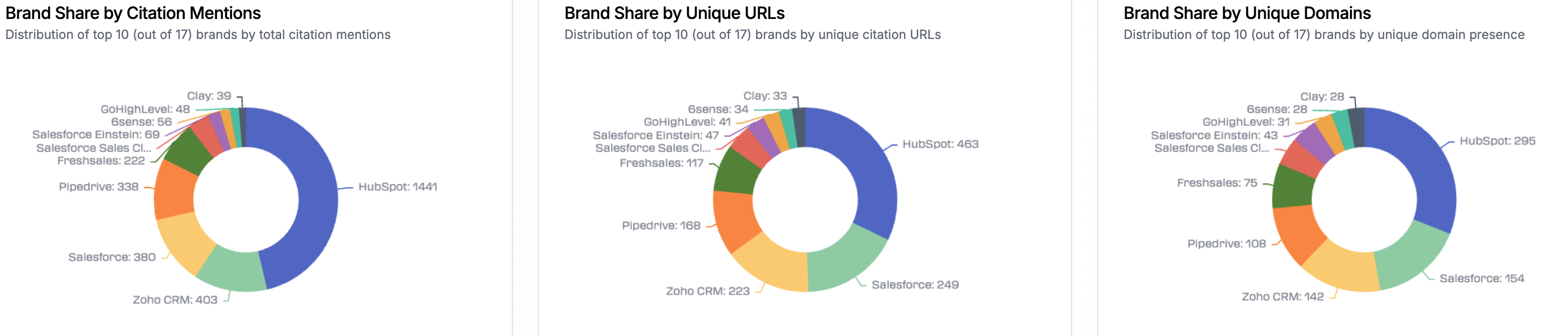
Three donut charts comparing your brand's citation presence to competitors:
Brand Share by Citation Mentions - distribution of the top 10 brands by total citation mentions
Brand Share by Unique URLs - distribution of the top 10 brands by unique citation URLs
Brand Share by Unique Domains - distribution of the top 10 brands by unique domain presence
Each chart shows the top 10 out of however many brands were detected, with exact counts displayed next to each brand name.
Brand Distribution by Total Citation Mentions
All detected brands ranked by the total number of times they were referenced in citations.
Brand Distribution by Unique URLs
All detected brands ranked by the number of unique URLs referencing them.

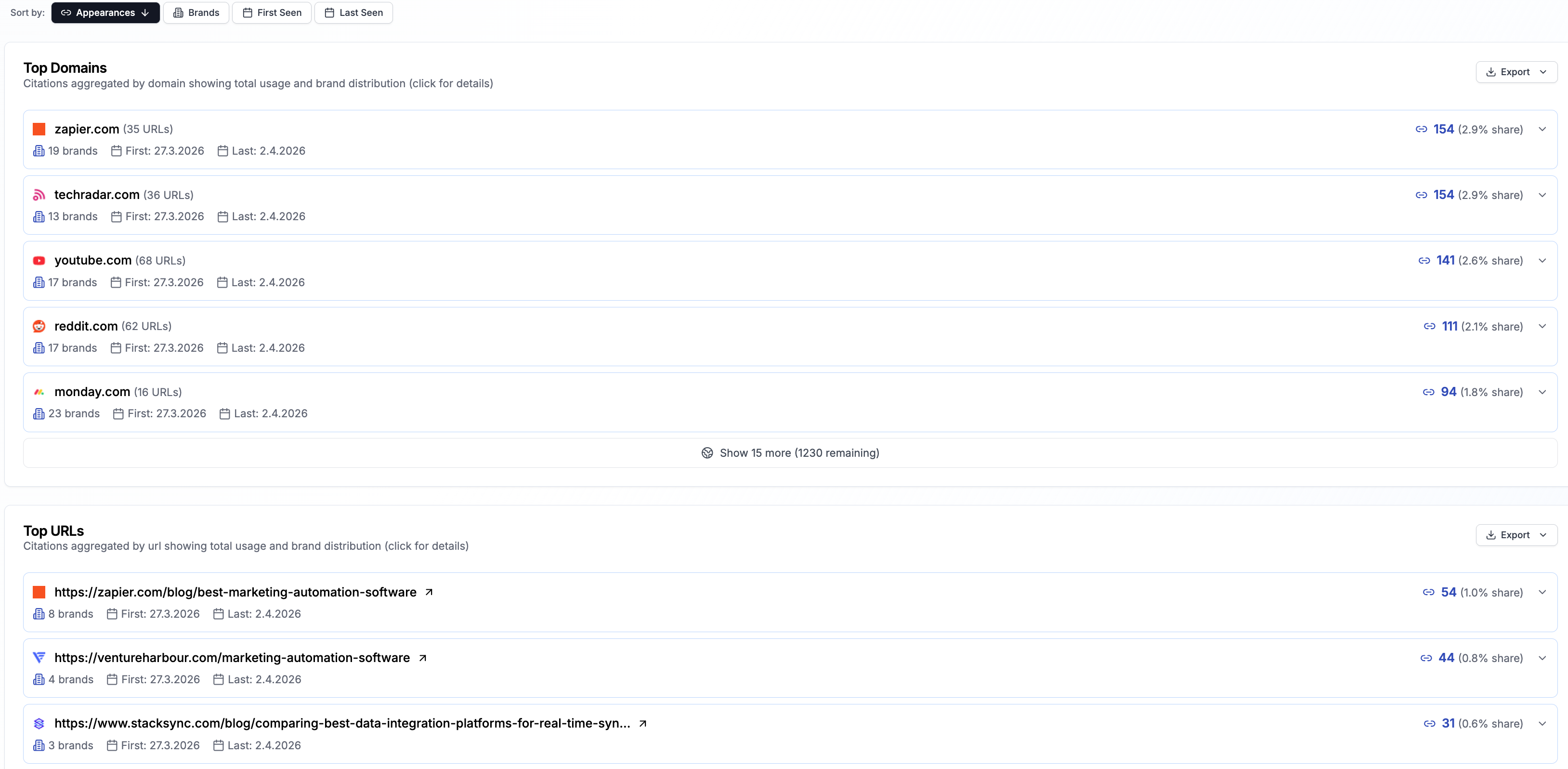
Top Domains List
Further down the page, you can see the top domains again in a detailed list format. Clicking on any domain reveals which brands were actually mentioned within citations from that domain.
The list also shows top domains where brands have not been mentioned at all, displayed in brackets. This can help you identify high-authority sources that cite content in your space but have not yet referenced your brand.
Top URLs
Goes one level deeper than domains, showing the specific pages that get cited most frequently. This could be a particular blog article, a YouTube video, a comparison page, or any other individual URL.
Filtering Your Data
All sections on the Citations tab can be filtered using the filter bar at the top of the page. You can narrow your view by AI engine, topic, tag, or individual search term to focus on the data most relevant to your analysis.